
Does stainless steel rust? The answer for 304, 316, 430 and 201
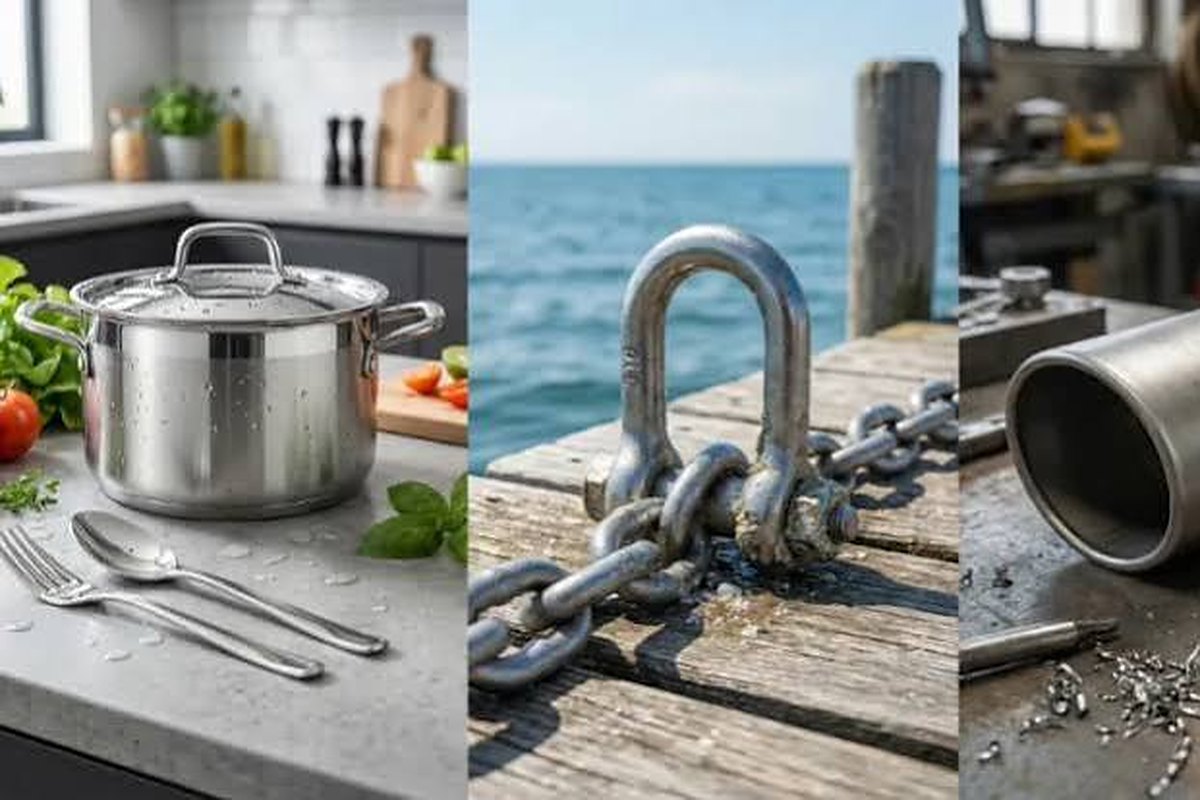
Short answer: stainless steel is very resistant to rust, but it is not unaffected forever under every condition. Even though it is called "rustproof", it needs the right grade and the right care.
Why do we call it rustproof?
The chromium in it forms a very thin, invisible protective layer on the surface. Even if the surface is scratched, this layer renews itself with oxygen in the air. That is why, unlike ordinary steel, it does not easily rust in moisture.
Differences by grade
- 304 and 18/10: Common, reliable grades for interiors and damp areas such as kitchens and bathrooms.
- 316: More resistant to salt and chlorine; preferred by the seaside and around pools.
- 430: Contains no nickel and is more economical. It works well in dry interiors but can stain sooner than 304 in damp and aggressive environments.
- 201: Contains manganese instead of nickel and is cheap. In damp environments it is less durable than 304.
Why do rust stains form?
Chlorine-based cleaners, salt water, staying wet and dirty for a long time, and steel wool or iron dust getting onto the surface can all cause stains. Most of the time the stain comes not from the steel itself but from foreign iron particles left on the surface.
What to do?
Choose the grade that suits the place of use, wipe the surface with a damp cloth and dry it, and don't use chlorine products. We can determine together which grade suits your project.
Next article: Does stainless steel attract magnets? What does the magnet test show?